Life Together: Sharing Our Lives

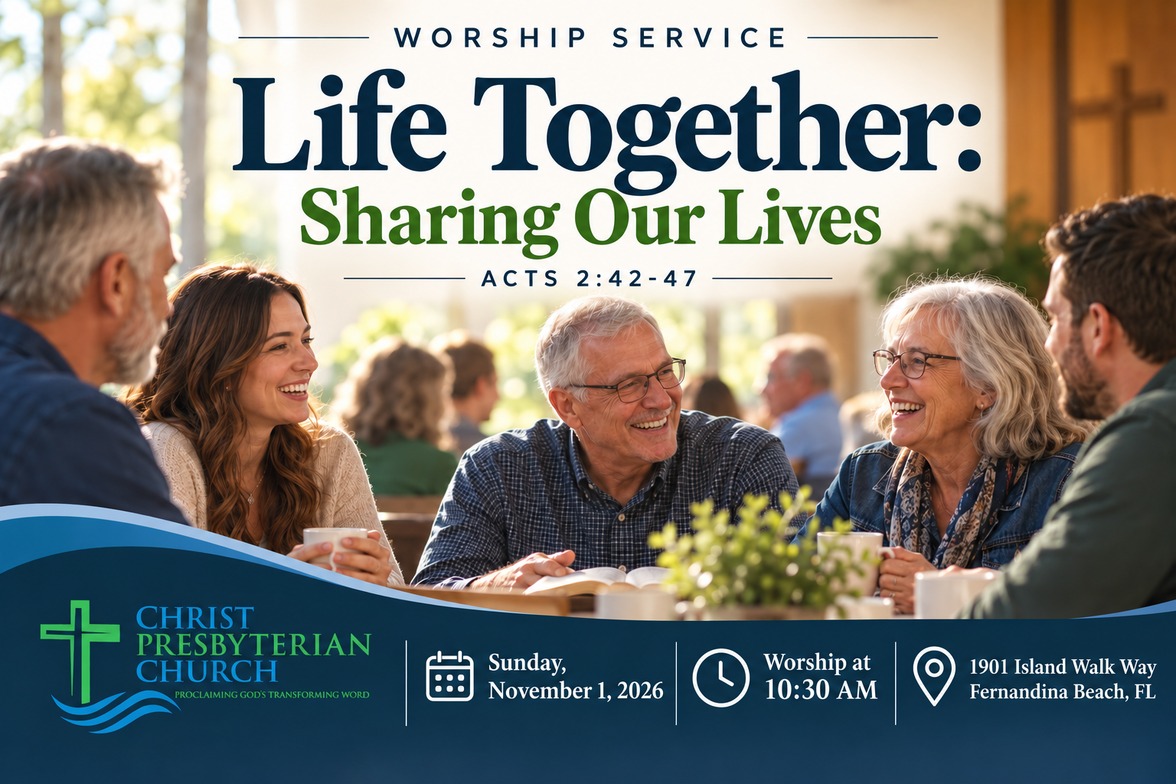
Life Together: Sharing Our Lives
“Day by day, attending the temple together and breaking bread in their homes, they received their food with glad and generous hearts.” (Acts 2:46)
Dr. Tom Hawkes
It has been said that Christians are like porcupines in a snowstorm. We need to huddle together for warmth, but when we do, we hurt each other. There is a great truth there. We are created by our relational God for relationship that reflects his: the perfect intimacy of the Trinity. “I and the Father are one” (John 10:30). Yet our sin makes life in community challenging, like the quills of snuggling porcupines. Our pride steers each conversation back to our concerns. Our fear keeps us hiding our real needs behind a smiling mask. Our envy teaches us to despise those we deem better, or better off, than us.
But when Christ saves us, he saves us not only from our sin, but also for his family, his new community, the church. We see this church community lived out in the pages of the New Testament. “Day by day, attending the temple together and breaking bread in their homes, they received their food with glad and generous hearts” (Acts 2:46).
They had the practice of doing life together. Whether they gathered in the temple to worship, and perhaps witness, or in private homes for meals, they were devoted to relationship together. They would eat together regularly. As the broke bread together they were happy and sincere in the simple joy of table fellowship.
This aspect of life, table fellowship, reflects the very life of Christ. He was constantly eating with his disciples and others. Whether in the home of Zaccheus the tax collector, or Simon the Pharisee, or Martha and Mary, or while feeding the crowds, or in the intimacy of the last supper, or with the surprise of the first breakfast after the resurrection, Jesus seemed to genuinely enjoy breaking bread with others. “Jesus said to them, ‘Come and have breakfast’” (John 21:12).
It is no wonder then that the Body of Christ reflects the life of Christ, devoted to table fellowship.
October 31, 1517, was the day Martin Luther reportedly nailed his Ninety-Five Thesis on the church door in Wittenberg, helping to spark the Reformation. While we rightly consider this a reformation of the theology of the church, it was also deeply a reformation of the practices of the church. The Reformers read their Bibles and longed to see the church which appeared in the pages of the New Testament, and here in Acts.
They readily embraced this practice of table fellowship. Luther and his wife Katie, for example, opened their large home constantly for dinner guests. The Luther table was filled with local believers, church leaders, students, friends, and their six children. The laughter-filled dinners were so deep and meaningful that Katie once joked that they should charge tuition for the meals. Luther praised this table fellowship as food for the soul. “When you are lonely and downcast, eat and drink in the company of others. God does not want us to be solitary, but has given us food and drink for mutual fellowship” (Luther’s Works, Vol. 54, Table Talk No. 122).
As we rightly celebrate the Reformation, let us remember this aspect of that great movement, it was a reformation of church life, which called believers back to the Christ-given joy of table fellowship. What better way to celebrate this year than breaking bread in our homes, as we receive our food with glad and generous hearts. After all, we do need to huddle together for the warmth of fellowship.
-
Worship Location
-
Mailing Address
Contact
Office Hours
Menu
About
